
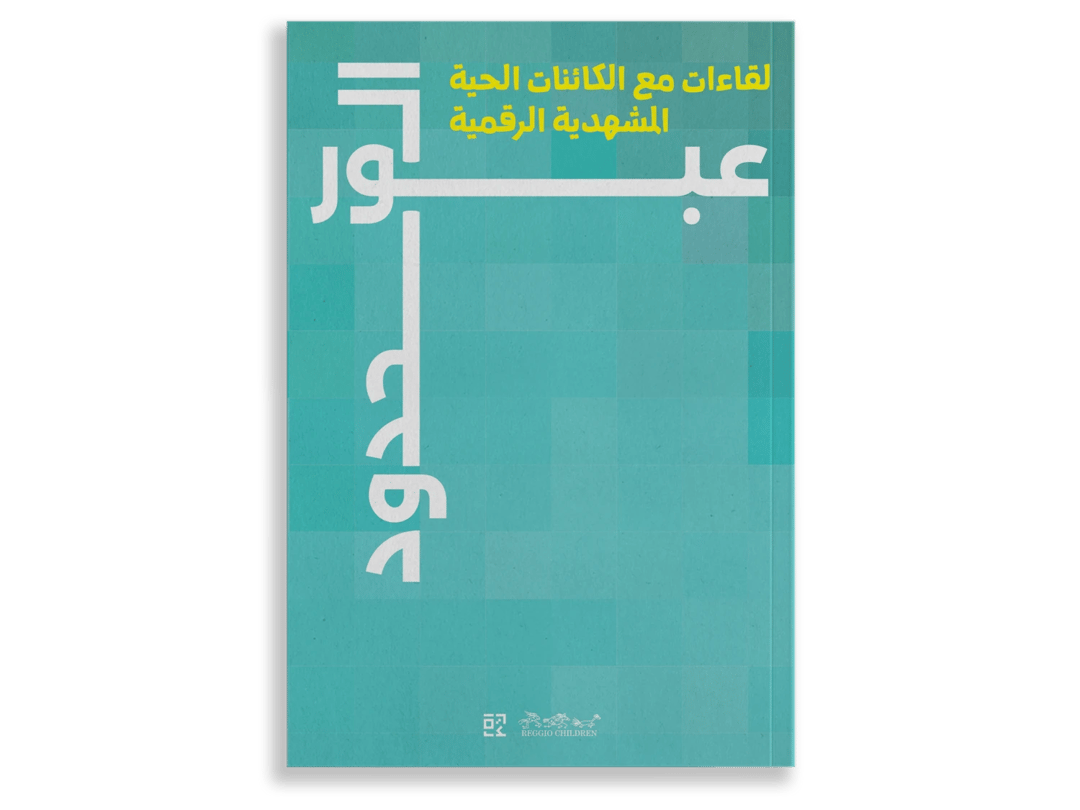
Bordercrossings
In digital environments as in all educational contexts within the municipal infant-toddler centres and preschools of Reggio Emilia, children act as authors and constructors of their own knowledge, as well as of their individual and collective representations. They refuse to be numbed by technology, instead transforming their diverse ideas into visual narratives.
Technology enters daily educational contexts not as something dominant or as a replacement for others, but as an element interwoven with other languages. It is not merely a technical or functional tool, but rather an environment in which different fields of learning and interdisciplinary explorations intersect. It supports children’s ways of knowing, opening up new horizons for social interaction and participation. Technology also has the capacity to transform learning contexts by offering new ways of representing children’s ideas and theories, while suggesting a cultural dimension that links the abstract with the tangible.
This visual publication recounts the exhibition “Bordercrossings: Encounters with Living Beings The Digital Landscape”, which brought together projects carried out in the municipal infant-toddler centres and preschools of Reggio Emilia. The children’s visual representations depict nature up close, as seen and studied through the senses, theories, and actions of today’s children using both analog and interconnected digital equipment.
The exhibition sought to imagine and highlight a digital poetics, to investigate how children and adults can engage with new media, create meaning, transform ways of communicating, and share knowledge. In its conclusion, the exhibition generated imaginaries, utopias, and metaphors for possible futures.
About the Reggio Emilia Approach:
The Reggio Emilia Approach® is an educational philosophy based on the image of a child with strong potentialities for development and a subject with rights, who learns through the hundred languages belonging to all human beings, and grows in relations with others.




© 2025 All Rights Reserved.