
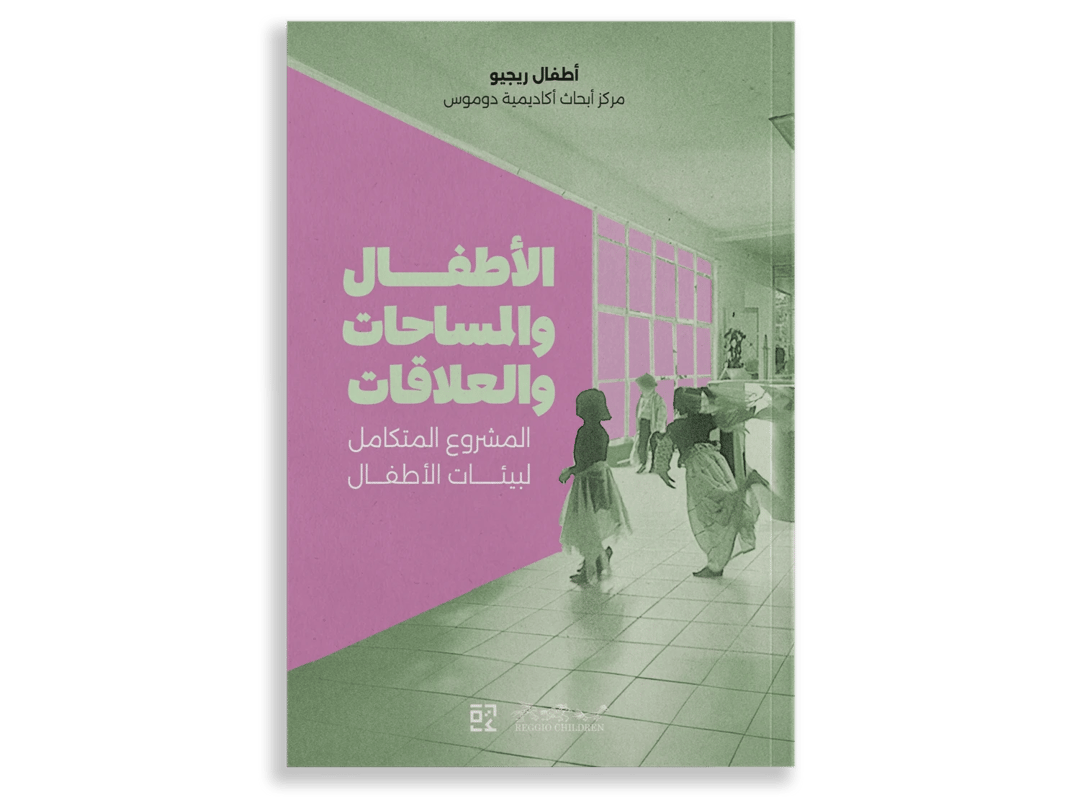
Children, Spaces, Relations
The municipal infant-toddler centres and preschools of Reggio Emilia are internationally recognized as a culturally significant experience and as a model of a “relational space” dedicated to young children.
As part of a set of activities and initiatives designed to further develop this educational experience, pioneered by Loris Malaguzzi, Reggio Children began a line of research in collaboration with Domus Academy on the design of spaces for young children. The aim was to enable an “encounter of minds” between the philosophy of Reggio Emilia’s pioneering pedagogical practices and innovative approaches in design and architecture.
In the first phase of the research, a group of architects, designers, teachers, and early childhood specialists, supported by contributions from representatives of various artistic and scientific disciplines, developed a large-scale project examining both the physical characteristics and the “soft qualities” of environments suitable for young children.
The work focuses on the foundational philosophy of Reggio Emilia’s preschools in relation to the school environment, offering insights and reflections on environmental quality as a point of reference for architects, designers, and educators engaged in the design of spaces for young children.
This research was carried out as part of a cooperation agreement between the Municipality of Reggio Emilia and the Italian Ministry of Education, with the aim of improving the quality of early childhood schools and strengthening research and educational excellence across the country.
About the Reggio Emilia Approach:
The Reggio Emilia Approach® is an educational philosophy based on the image of a child with strong potentialities for development and a subject with rights, who learns through the hundred languages belonging to all human beings, and grows in relations with others.




© 2025 All Rights Reserved.