
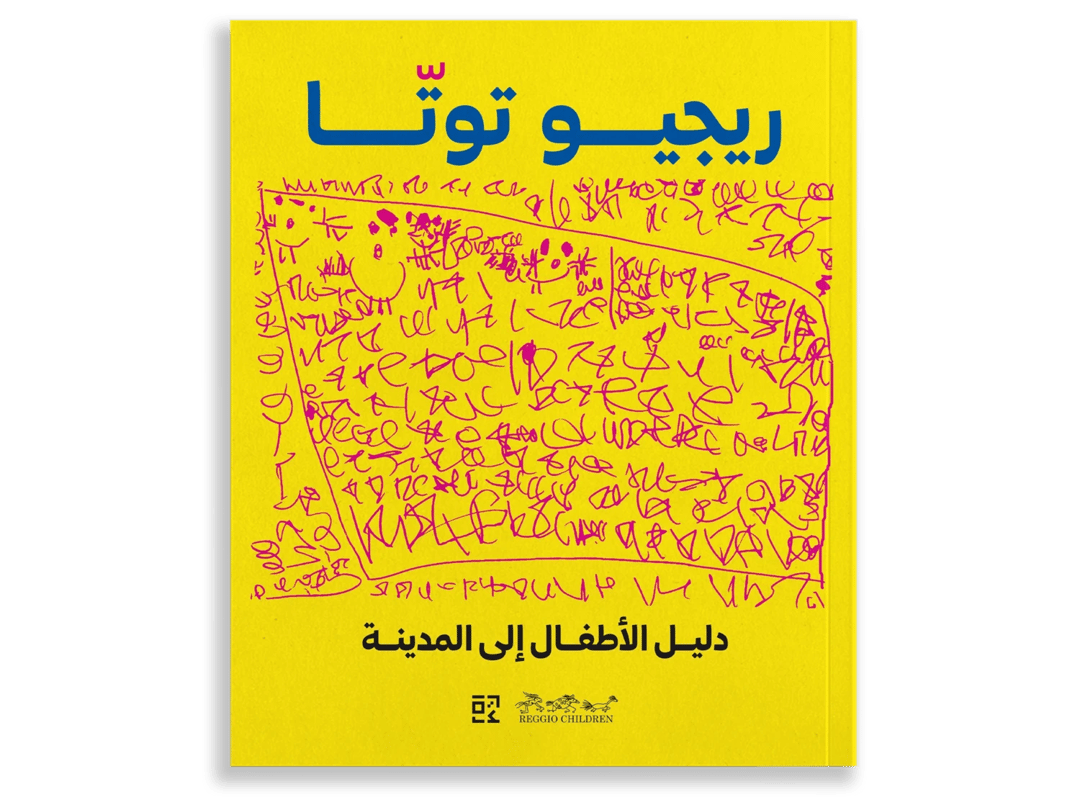
Reggio Tutta
It seems that the way children recount their personal experiences and feelings generally portrays the city as positive, livable, and welcoming.
“Look, this is how I tell it: Reggio is the place where my school, my home, and my friends are.”
All elements of criticism seem to be absent—or at least undiscovered by the children. At first, this aspect surprised us as adults; children live both the “light” and the “shadows” of the city at the same time.
Why this lack of criticism? What are the possible reasons? Perhaps we should take into account the ages of these children. Between three and six years old is a stage of life in which the encounter with the city is supported by adults. What other possible evidence, with different viewpoints and points of focus, might older children or adolescents have produced?
Perhaps the reason lies in the fact that the city truly is the living context of young children; it is the place of meaningful relationships in their personal experience. Or perhaps because the challenge of presenting Reggio to others results in a warm feeling of welcome and hospitality. The children also refuse to betray their city:
“When they come here, I say: go and see all the other places in Italy, and you’ll discover that Reggio is really beautiful!”
“And if they say that Reggio is really ugly, what do we do then?”
“They can go wherever they want! But I’ll make them come to my house to see how beautiful it is! Then, when I take them to my city, I’ll show them all the beautiful things: the park, the dove, the buildings… everything! Then the library, the statues, and the old historical things.”
Or perhaps the reason lies above all in the fact that children’s view of the city is optimistic, full of life, open to the future, and firmly rooted in the present.
A sense of the future that boldly demands to be listened to and engaged with.
A strong sense of optimism that claims the right to be part of the dialogue in shaping and giving identity to the city.
About the Reggio Emilia Approach:
The Reggio Emilia Approach® is an educational philosophy based on the image of a child with strong potentialities for development and a subject with rights, who learns through the hundred languages belonging to all human beings, and grows in relations with others.




© 2025 All Rights Reserved.